
Addressing Vasculogenic Erectile Dysfunction at Its Source
Erectile dysfunction affects approximately one in five men over the age of 40 in the UK, with prevalence increasing significantly with age and the presence of cardiovascular risk factors. Despite being highly treatable, the majority of men do not seek clinical assessment, and those who do are most commonly prescribed phosphodiesterase-5 inhibitors such as sildenafil or tadalafil. While these medications are effective for many men, they do not address the underlying vascular pathology responsible for most cases of vasculogenic erectile dysfunction. When medication produces insufficient results, or when patients prefer a treatment that targets the cause rather than providing temporary pharmacological support, low-intensity shockwave therapy represents a clinically validated alternative.
At Core Body Clinic’s Reading clinic, our specialist clinicians have extensive experience in male pelvic health. Every patient undergoes a structured clinical assessment before treatment begins to confirm a primary vasculogenic diagnosis and ensure shockwave therapy is the most appropriate clinical pathway.
Understanding Vasculogenic Erectile Dysfunction
Erectile function depends on healthy arterial blood flow into the corpora cavernosa, the paired cylindrical structures within the penis responsible for engorgement during arousal. Normal erection requires both adequate arterial inflow and sufficient relaxation of the smooth muscle within the cavernous tissue to allow blood to accumulate under pressure.
In vasculogenic erectile dysfunction, this process is compromised at the vascular level. Endothelial dysfunction within the penile arteries reduces nitric oxide availability, impairing smooth muscle relaxation and restricting arterial inflow. Microangiopathy caused by conditions including type 2 diabetes, hypertension, hypercholesterolaemia, and chronic smoking progressively narrows the small vessel diameter supplying the corpora, reducing peak inflow velocity below the threshold required for adequate rigidity.
This vascular mechanism accounts for the majority of organic erectile dysfunction cases. It is distinct from psychogenic presentations, where vascular anatomy is intact but psychological factors inhibit the neurological signalling that initiates erection. Correct identification of the underlying mechanism is essential before treatment is selected, which is why clinical assessment always precedes shockwave therapy at our Reading clinic.
How Low-Intensity Shockwave Therapy Works
Low-intensity shockwave therapy delivers controlled acoustic energy pulses to the penile tissue at a frequency and intensity that stimulates biological repair mechanisms without causing tissue damage. The mechanism differs fundamentally from the high-intensity shockwave used in orthopaedic applications such as tendon and joint treatment.
At the cellular level, low-intensity shockwaves trigger three key biological responses within penile tissue. First, angiogenesis: the formation of new blood vessels within the corpora cavernosa, increasing the total vascular supply available to support erection. Second, neurogenesis: stimulation of neural repair pathways that restore the neurological signalling between the central nervous system and the penile vasculature. Third, activation of resident progenitor cells within the corpora that contribute to tissue regeneration and improved smooth muscle function.
The combined effect is a progressive restoration of vascular and neurological function within the erectile tissue. Unlike pharmacological treatment, which provides temporary symptomatic support, shockwave therapy produces structural improvement in the tissue itself. This is why clinical studies demonstrate that patients who respond to shockwave therapy maintain benefit after treatment ends, rather than returning to baseline when the medication is withdrawn.
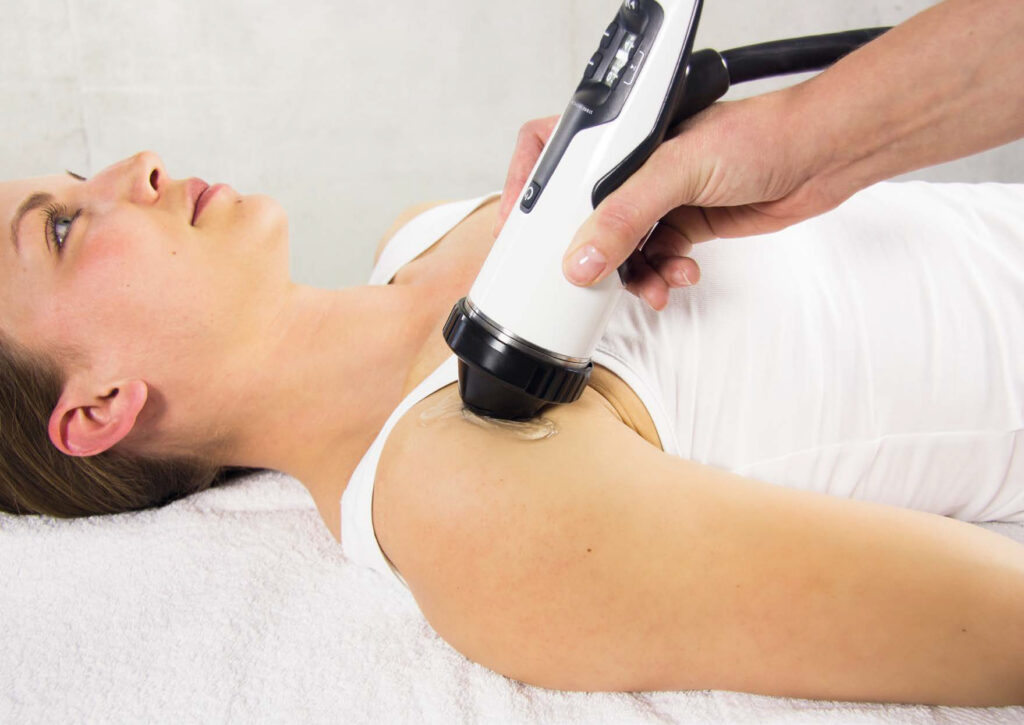
At our Reading clinic, treatment is delivered using calibrated shockwave equipment operated by specialist clinicians. Each session is non-invasive, requires no anaesthetic, and is completed within 20 to 30 minutes. A standard treatment course consists of six sessions delivered over a period of six weeks, with one session per week.
Clinical Evidence
The evidence base for low-intensity shockwave therapy in vasculogenic erectile dysfunction has grown considerably over the past decade. Multiple randomised controlled trials and systematic reviews have demonstrated statistically significant improvements in erectile function scores, penile blood flow parameters, and patient-reported outcomes following a standard course of treatment.
Key findings from the clinical literature include improved International Index of Erectile Function (IIEF) scores in the majority of treated patients, with improvements sustained at 12-month follow-up in responders. Studies have also demonstrated measurable increases in peak systolic velocity within the cavernous arteries following treatment, providing objective vascular evidence of tissue-level response rather than relying solely on patient-reported outcome measures.
A 2020 meta-analysis reviewing data from multiple randomised controlled trials concluded that low-intensity shockwave therapy produces clinically meaningful improvements in erectile function in men with vasculogenic erectile dysfunction, with a favourable safety profile and no serious adverse events reported across the pooled study populations.
Shockwave therapy is now endorsed as a treatment option for vasculogenic dysfunction by the European Association of Urology, whose guidelines acknowledge the growing evidence base and position shockwave therapy as a viable intervention for appropriately selected patients.
Who Is Suitable for Shockwave Therapy for Erectile Dysfunction in Reading?
Shockwave therapy for erectile dysfunction at our Reading clinic is most appropriate for men with mild to moderate vasculogenic symptoms. The following patient profiles represent the strongest candidates for treatment:
- Men with erectile dysfunction are associated with cardiovascular risk factors, including hypertension, hypercholesterolaemia, or type 2 diabetes
- Men who have responded to PDE-5 inhibitors but wish to reduce or eliminate medication dependence
- Men who have had a partial or insufficient response to sildenafil or tadalafil
- Men who are unable to take PDE-5 inhibitors due to contraindications including concurrent nitrate use
- Men with erectile dysfunction following prostate cancer treatment or pelvic surgery where nerve preservation was incomplete
- Men with early-stage vasculogenic dysfunction who wish to address the condition before significant arterial compromise has developed
Psychogenic erectile dysfunction, where vascular function is intact, does not respond to shockwave therapy in the same way. Where the clinical picture suggests a significant psychogenic component, your clinician will discuss this at assessment and may recommend adjunctive approaches alongside or instead of shockwave therapy.
The Assessment Process at Our Reading Clinic
Before shockwave therapy for erectile dysfunction is offered at our Reading clinic, every patient undergoes a structured clinical assessment. This ensures two clear outcomes: confirming a primary vasculogenic diagnosis and establishing baseline function scores to accurately measure treatment response.
The assessment includes a detailed medical and sexual health history covering symptom onset, severity, consistency across situations, cardiovascular risk factor profile, current medication, and any previous treatment. Validated outcome measures, including the International Index of Erectile Function questionnaire, are completed to establish a baseline score.
Where clinically indicated, penile Doppler ultrasound assessment can be arranged to directly measure cavernous artery blood flow velocity and confirm the vascular basis of the dysfunction. This level of diagnostic precision is rarely available in primary care settings and represents a significant advantage in ensuring treatment is correctly targeted.
Following assessment, your clinician will confirm whether shockwave therapy is appropriate, outline the expected treatment course and likely outcomes, and answer any questions before treatment begins. All consultations are conducted in fully private clinical rooms with complete confidentiality.
What to Expect During Treatment
Each shockwave therapy session at our Reading clinic is non-invasive and does not require anaesthetic or sedation. A conductive gel is applied to the treatment area and the shockwave applicator is placed against the penile tissue. Acoustic pulses are delivered across multiple treatment zones covering the shaft and perineal region according to a standardised protocol.
The sensation during treatment is typically described as a mild, rhythmic pressure. The treatment is not painful. Sessions last 20 to 30 minutes and patients return to normal activity immediately afterwards. There is no recovery period, no post-procedure restriction, and no requirement to attend hospital.
A standard course consists of six weekly sessions. Some patients with more significant vascular compromise may benefit from an extended course, which your clinician will discuss at assessment or during treatment review. Clinical response is assessed using validated outcome measures at the end of the treatment course and at follow-up.
Shockwave Therapy Alongside Men's Health Physiotherapy
For patients whose erectile dysfunction has a combined vascular and pelvic floor component, shockwave therapy can be delivered alongside men’s health physiotherapy. Pelvic floor dysfunction, including hypertonic pelvic floor muscles and pudendal nerve irritation, can contribute to the symptoms independently of vascular factors, and in many patients, both mechanisms are present simultaneously.
Where assessment identifies a significant pelvic floor contribution alongside vasculogenic dysfunction, a combined treatment pathway addresses both components concurrently. This integrated approach, available within a single clinic at The Atrium, produces more complete outcomes than addressing either mechanism in isolation.
Shockwave Therapy for Erectile Dysfunction at Our Reading Clinic
Core Body Clinic’s Reading clinic at The Atrium, Scours Lane, RG30 6AY provides specialist shockwave therapy for erectile dysfunction in a fully confidential clinical environment. All treatments are delivered by advanced practice clinicians experienced in male pelvic and sexual health. We accept all major private medical insurance providers and welcome self-funding patients. Full pricing is available on our price list page.
No GP referral is required. Book your confidential assessment online or call 01792 369535.
How many sessions of shockwave therapy will I need?
A standard treatment course consists of six sessions delivered weekly over six weeks. Some patients with more advanced vascular compromise may benefit from an extended course. Response is assessed using validated outcome measures at the end of the treatment course and at a follow-up appointment. Your clinician will set clear expectations at your initial assessment.
How long before I notice improvement?
Many patients begin noticing improvement during the treatment course, typically from weeks three to four onwards. Full clinical benefit continues to develop after the course ends as vascular and neurological repair mechanisms progress within the tissue. The majority of patients who respond to treatment report sustained improvement at 12-month follow-up without further intervention.
Is shockwave therapy for erectile dysfunction painful?
No. Treatment involves a mild rhythmic pressure sensation. It is non-invasive, requires no anaesthetic, and patients return to normal activity immediately after each session. There is no recovery period and no restriction on activity following treatment.
Will I still need medication after shockwave therapy?
Shockwave therapy aims to restore vascular function within the erectile tissue rather than provide temporary pharmacological support. Patients who respond fully to treatment often reduce or discontinue PDE-5 inhibitor use. Some patients find that shockwave therapy restores a response to medication that had previously become insufficient. Your clinician will discuss realistic expectations based on your specific presentation at assessment.
Is this treatment confidential?
Completely. All consultations and treatment sessions take place in private clinical rooms at The Atrium. Your records are managed in accordance with GDPR and healthcare confidentiality standards. Our clinicians have extensive experience working with men discussing intimate health concerns and approach every consultation with professionalism and discretion.