
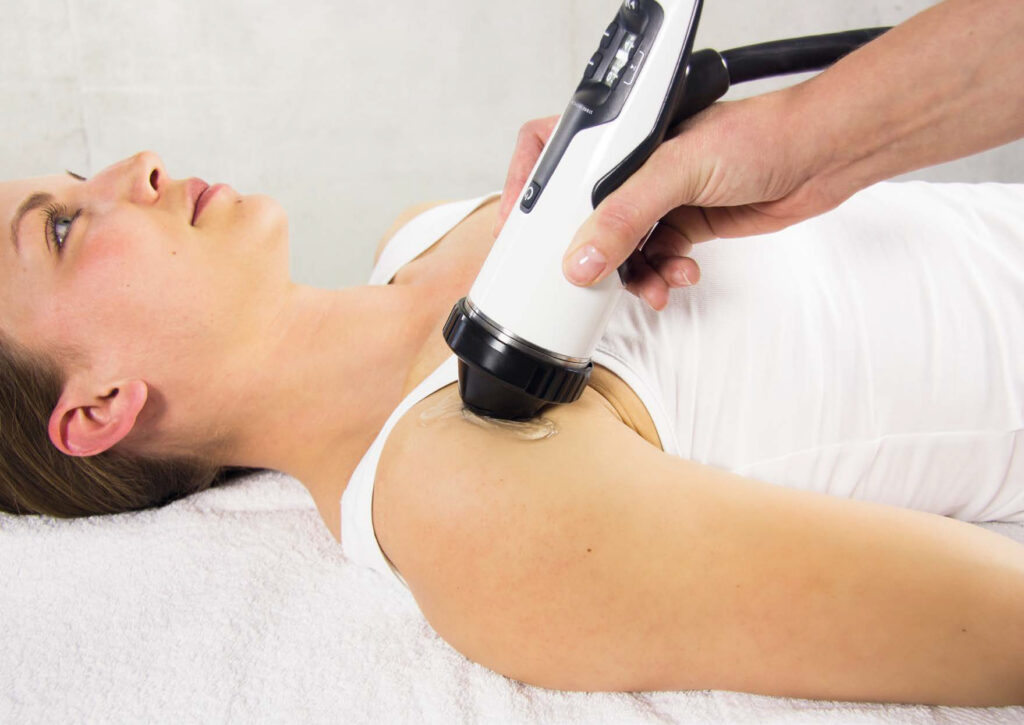
What Is Shockwave Therapy?
Shockwave therapy in Reading is a non-invasive, evidence-based treatment that uses high-energy acoustic waves to stimulate tissue repair, reduce chronic pain, and promote blood flow to injured areas. It works by delivering controlled shockwaves into the affected tissue, creating a mini sonic response that kick-starts the body’s natural healing process. This is particularly effective in degenerative or long-standing conditions where the tissue has stopped responding to conventional therapy.
Treatment is delivered using two of the most clinically advanced machines available: the Storz Duolith and the EMS Doloclast Piezoclast. Both are used regularly in elite sport and clinical settings worldwide, and their availability at our Reading clinic means patients have access to the same standard of care as professional athletes.
How Shockwave Therapy Works at Our Reading Clinic
Every patient referred or self-referred for shockwave therapy at our Reading clinic begins with a clinical assessment. Our therapists need to confirm the diagnosis before treatment begins, and in some cases will use diagnostic ultrasound to image the affected structure directly. This ensures the shockwave energy is targeted precisely and that the treatment is appropriate for the presenting condition.
Sessions typically last 15 to 20 minutes and are carried out on a weekly or fortnightly basis. The sensation during treatment is often described as a deep, rhythmic pressure that can be uncomfortable at moderate intensity but is always delivered at a level that is tolerable for the patient. Any discomfort typically settles within a few hours of each session.
Conditions Treated with Shockwave Therapy in Reading
Our therapists at the Reading clinic have extensive experience applying shockwave therapy to the following conditions:
- Plantar fasciitis
- Calcific tendonitis
- Achilles tendon pain and insertional Achilles pain
- Patella tendonitis and jumpers knee
- Greater trochanteric pain syndrome and hip tendon problems
- Tennis and golfers elbow
- ITB syndrome and runners knee
- Haglund’s deformity and Tibialis Posterior tendon syndrome
- Bone and stress fractures
- Medial tibial stress syndrome (shin splints)
For conditions that respond better to a combined approach, shockwave therapy at our Reading clinic is frequently used alongside physiotherapy and sports massage to deliver a more complete treatment pathway.
How Many Sessions Will I Need?
The number of sessions depends on the condition being treated and the patient’s response to therapy. As a general guide:
Most tendon conditions respond within 4 sessions on average. Calcific tendonitis typically requires 6 to 8 sessions due to the nature of the calcific deposit. Bone stress injuries and more chronic conditions may also require 6 to 8 sessions. Patients with long-standing problems that have not responded to other treatments may need a slightly longer course, which your therapist will discuss with you at assessment.
Shockwave therapy is most effective when combined with an appropriate rehabilitation programme. Our Reading clinic team will advise on exercises and activity modification to support recovery between sessions.
Expert-Led Shockwave Therapy at our Reading Clinic
Core Body Clinic has been providing specialist physiotherapy and advanced treatments at The Atrium, Scours Lane, Reading since 2014. Our therapists bring clinical experience in musculoskeletal assessment and advanced practice physiotherapy, meaning shockwave therapy at our Reading clinic is never applied in isolation. It is always part of a considered, assessment-led treatment plan.
We are recognised by all major private medical insurance providers and welcome self-funding patients. Full pricing is available on our price list page. No GP referral is required. You can book directly online or call us on 01792 369535.
What conditions can shockwave therapy in Reading treat?
At our Reading clinic, shockwave therapy is used to treat plantar fasciitis, calcific tendonitis, Achilles tendon pain, patella tendonitis, greater trochanteric pain syndrome, tennis and golfers’ elbow, shin splints, and a range of other chronic tendon and soft tissue conditions. A clinical assessment is always carried out before treatment begins to confirm the diagnosis and ensure shockwave therapy is appropriate.
How many shockwave therapy sessions will I need at the Reading clinic?
The number of sessions varies by condition. Most tendon conditions respond within four sessions on average. Calcific tendonitis and bone stress injuries typically require six to eight sessions. Your therapist will give you a realistic estimate at your first appointment based on your specific diagnosis and history.
Does shockwave therapy hurt?
The treatment creates a deep, rhythmic sensation that can feel uncomfortable at moderate intensity. However, sessions are always delivered at a level that is tolerable for the patient. Most people find the sensation manageable, and any discomfort typically settles within a few hours of the session. As treatment progresses, many patients find the sensation becomes more comfortable as the tissue responds.
Do I need a referral to get an appointment?
No referral is needed. You can self-refer by booking directly online or by calling 01792 369535. If you already have a confirmed diagnosis, you may be able to book straight into a treatment session. Our therapists will always carry out an assessment and, where needed, an ultrasound scan before proceeding with shockwave treatment.
Can this be used alongside other treatments?
Yes. At our Reading clinic, shockwave therapy is frequently combined with physiotherapy and sports massage for conditions that benefit from a multi-faceted approach. Your therapist will recommend the most appropriate combination based on your assessment, ensuring each element of your treatment plan works together effectively.