
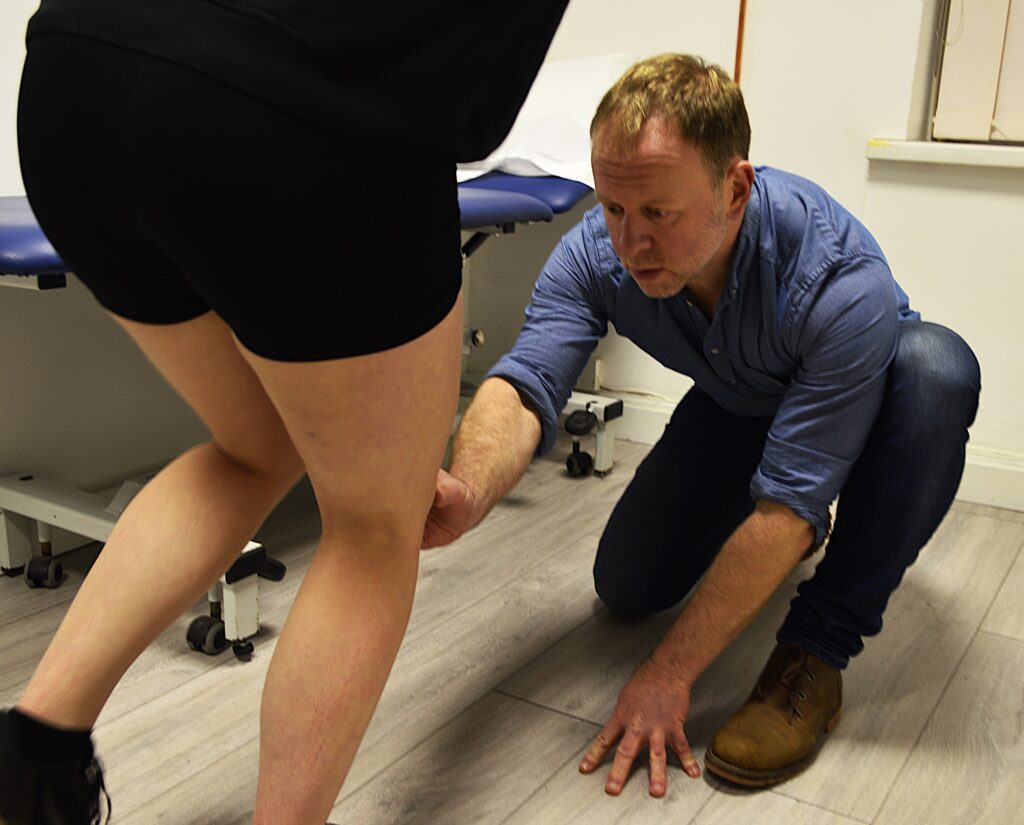
What Makes Sports Physiotherapy Different?
Sports physiotherapy in Reading at Core Body Clinic is a specialist branch of clinical physiotherapy focused on the assessment, diagnosis, and rehabilitation of injuries that occur through sport, exercise, and physical activity. It differs from standard musculoskeletal physiotherapy in one important way: the treatment plan is built around your sport, your training load, and your performance goals, not just the injury itself.
This distinction matters. An athlete cannot simply stop training for six weeks while an injury heals. Recovery needs to be active, progressive, and structured in a way that maintains fitness while the injured tissue repairs. Our sports physiotherapists in Reading are experienced in designing exactly this kind of programme.
Advanced Assessment and Diagnosis at Our Reading Clinic
Before any treatment begins, our physiotherapists carry out a thorough clinical assessment. This goes beyond a basic movement screen. We take a detailed history of the injury, your sport, your training volume, and any previous injuries that may be relevant. Where structural assessment is needed, we use diagnostic ultrasound to image tendons, ligaments, and soft tissue in real time, giving us an accurate picture of the problem from day one.
This assessment-first model means treatment is targeted and appropriate rather than generic. It also allows us to identify contributing factors such as overtraining, biomechanical loading patterns, or technique-related issues that may be driving the injury in the first place.
A full list of the conditions we treat is available on our conditions page.
Injuries and Conditions We Treat in Reading
Our sports physiotherapy service at the Reading clinic addresses the following injuries and conditions:
- Ankle sprains and ligament injuries
- Achilles tendon pain and tendinopathy
- Knee pain including patella tendonitis, runners knee, and ITB syndrome
- Shoulder and rotator cuff injuries
- Hip pain, groin strains, and greater trochanteric pain syndrome
- Tennis and golfer’s elbow
- Plantar fasciitis and foot pain
- Stress fractures and bone stress injuries
- Shin splints and medial tibial stress syndrome
- Muscle tears, strains, and soft tissue injuries
For chronic tendon conditions that have not responded to physiotherapy alone, we combine treatment with shockwave therapy at our Reading clinic, which is available in the same building without an external referral.
Overtraining, Load Management, and Return to Sport
One area where Core Body Clinic’s Reading sports physiotherapy service is particularly strong is in managing athletes whose problems stem not from a single traumatic event but from cumulative training load. Overtraining syndrome, stress reactions, and Relative Energy Deficiency in Sport (REDS) are conditions that are commonly missed by clinicians without a dedicated sports background and can keep athletes out of training for extended periods if not identified and managed correctly.
Our physiotherapists are experienced in recognising these presentations and building recovery programmes that allow athletes to remain active during rehabilitation, where it is safe to do so. Return to sport planning is structured, evidence-based, and built around the demands of the patient’s specific sport rather than a generic timeline.
For younger athletes, we also have specialist knowledge of growth-related injuries, including Osgood-Schlatters disease, Severs disease, and enthesiopathies that are particularly common during adolescent development.
Why Choose Core Body Clinic for Sports Physiotherapy in Reading?
Core Body Clinic has been based at The Atrium Health Club, Scours Lane, Reading since 2014, placing our clinic at the centre of one of Reading’s most active fitness and sports communities. The environment itself reflects the patient group we serve: athletes, gym-goers, and active individuals who need clinical care that understands the demands of sport.
Our sports physiotherapists work alongside an osteopath, sports massage therapists, and injection specialists within the same clinic. This means patients with complex presentations have access to a full clinical team under one roof, and treatment decisions are always informed by the broader picture.
We are recognised by all major private medical insurance providers and welcome self-funding patients. Full pricing is available on our price list page. No GP referral is required, and appointments can be booked directly online.
What does sports physiotherapy in Reading at Core Body Clinic involve?
Our sports physiotherapy service begins with a thorough clinical assessment covering your injury, training history, sport-specific demands, and performance goals. Where needed, we use diagnostic ultrasound to confirm the diagnosis. From there, your physiotherapist builds a rehabilitation programme that works around your training where possible, with a structured return to sport plan included from the outset.
What sports injuries do your Reading physiotherapists treat?
We treat a wide range of sports injuries at our Reading clinic, including ankle sprains, Achilles tendon pain, knee pain, rotator cuff injuries, hip and groin strains, tennis elbow, plantar fasciitis, stress fractures, shin splints, and muscle tears. We also have specific experience in overtraining syndrome and Relative Energy Deficiency in Sport.
Can you treat young athletes with growth-related injuries?
Yes. We have specialist experience in assessing and managing growth-related injuries in adolescent athletes, including Osgood-Schlatters disease, Severs disease, and other enthesiopathies. If your child has an injury that has not been properly explained or managed, we can carry out a full assessment and provide a clear diagnosis and treatment plan.
Do I need a GP referral for sports physiotherapy?
No referral is needed. You can book directly through our online booking system or by calling 01792 369535. We accept self-referrals and referrals from GPs and consultants. We are recognised by all major private medical insurance providers and also welcome self-funding patients.
How long will it take to recover from a sports injury?
Recovery time depends on the nature, severity, and duration of the injury. Acute soft tissue injuries, such as muscle strains, may resolve within three to six sessions. Chronic tendon conditions or stress fractures typically require a longer course of treatment. Your physiotherapist will give you a realistic and sport-specific timeframe at your first appointment and review progress at each stage.