
Runner’s knee is a broad term used to describe pain around or behind the kneecap. It most commonly refers to patellofemoral pain, which tends to become noticeable when the knee is repeatedly loaded during activities such as running, squatting, climbing stairs or walking downhill.
Despite the name, you do not need to be a runner to develop it. Gym training, field sports, hiking and sudden increases in everyday activity can produce similar symptoms.
Runner’s knee is often manageable, but the term should not be applied to every painful knee. Several conditions can cause overlapping symptoms, so an appropriate assessment may be needed to identify what is contributing to the discomfort.
This article provides general information and does not replace individual medical advice, diagnosis or assessment.
What Does Runner’s Knee Mean?
Runner’s knee is not one precise medical diagnosis. In most cases, the term is used to describe patellofemoral pain, which affects the area where the kneecap, or patella, meets the thigh bone.
Symptoms are usually felt around, beneath or behind the kneecap. They often begin gradually after a change in training or activity rather than following one obvious injury.
The NHS overview of patellofemoral pain syndrome explains that the condition is also known as anterior knee pain or runner’s knee.
Pain around the kneecap does not always indicate significant structural damage. In many cases, symptoms are associated with how the joint responds to repeated or increased loading. However, an assessment may be needed to rule out other causes.
What Are the Symptoms of Runner’s Knee?
The most common symptom is an ache around, beneath or behind the kneecap. Some people experience sharper discomfort when the knee is placed under greater load.
Symptoms may occur during or after:
- Running, particularly after increasing distance or pace
- Going up or down stairs
- Squats, lunges or jumping
- Walking downhill
- Sitting with the knee bent for a long period
- Getting up from a chair
- Repeated training with limited recovery
Clicking, grinding or crackling may also occur. Knee noises are common and do not automatically mean that an injury is present, particularly when they are painless.
Marked swelling, locking, repeated giving way or an inability to bear weight is less typical of uncomplicated patellofemoral pain. These symptoms may indicate that another condition needs to be considered.
Is All Running-Related Knee Pain Runner’s Knee?
No. The phrase is often used loosely, but several knee problems can occur during running or exercise.
| Pain pattern | Possible condition | Common clue |
| Around or behind the kneecap | Patellofemoral pain | Often aggravated by stairs, squats or prolonged sitting |
| Directly below the kneecap | Patellar tendinopathy | More localised pain during jumping or resisted knee loading |
| Outside of the knee | Iliotibial band-related pain | May begin after a predictable running distance |
| Along the joint line | Meniscal problem | May follow twisting or involve catching |
| Sudden pain after trauma | Acute knee injury | May involve swelling, instability or difficulty bearing weight |
These patterns can overlap and cannot confirm a diagnosis without considering your symptoms, activity history, examination findings and any recent injury.
Our guide to knee pain and its possible causes explains why the location of the discomfort is only one part of the clinical picture.
What Causes Runner’s Knee?
Runner’s knee rarely comes down to one weak muscle, one pair of shoes or a kneecap that is simply out of alignment.
It often develops through a combination of training load, physical capacity, movement demands and recovery.
Changes in Training or Activity
Symptoms may appear when running distance, speed, hills or weekly training frequency increase faster than the body can adapt.
The same can happen when someone returns to exercise after illness, injury or an extended break. Cardiovascular fitness may improve more quickly than the muscles and joints regain their previous tolerance.
Total activity also matters. Adding running sessions, heavy gym work and more daily walking during the same week may create a much larger increase than the running plan alone suggests.
Strength and Physical Capacity
The quadriceps help manage force around the kneecap. The muscles around the hip and calf also influence how the leg absorbs and controls load.
Reduced strength, endurance or movement capacity may contribute to symptoms, particularly when fatigue begins to affect how the leg moves.
Not everyone with runner’s knee has the same weakness or movement pattern. Rehabilitation may therefore need to be adapted according to your symptoms, current capacity and activity goals.
Recovery, Terrain and Footwear
Limited recovery between demanding sessions may increase irritation, particularly when training continues despite steadily worsening symptoms.
Terrain and footwear may also influence how much load passes through the knee. A sudden move to hillier routes or a significant change in shoes can alter the demands placed on the joint.
Footwear is only one part of the picture. Replacing your shoes will not necessarily resolve pain caused by an unsuitable workload or insufficient conditioning.
How Is Runner’s Knee Diagnosed?
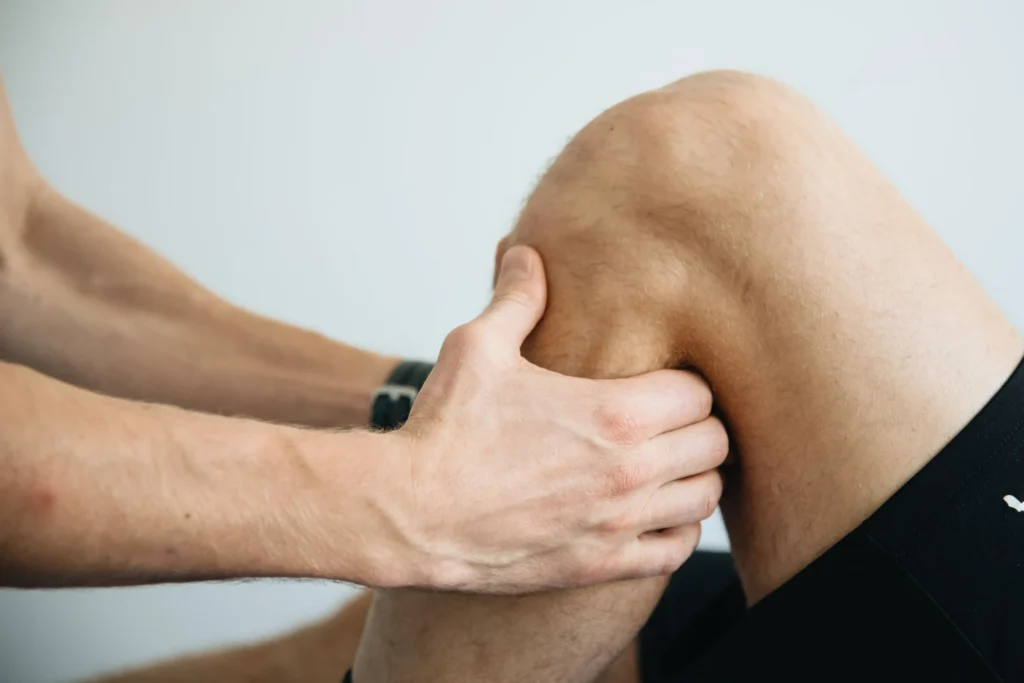
Assessment usually begins with a discussion about:
- Where and when the pain occurs
- Recent changes in training or daily activity
- Previous knee or leg injuries
- Your work and exercise demands
- What you want to return to
A physiotherapist may then assess knee and hip movement, quadriceps and calf strength, balance, single-leg control and functional tasks such as squatting or stepping down.
Running technique may also be observed when it is relevant to your symptoms and goals.
There is no single physical test that confirms every case of patellofemoral pain. The assessment is used to reproduce familiar symptoms safely, consider alternative causes and identify factors that may guide rehabilitation.
Patellofemoral pain is generally assessed through your medical history and a physical examination. Imaging may be considered when the presentation is unusual, follows significant trauma or suggests another condition.
Our article on what musculoskeletal physiotherapy actually does explains how an assessment can be used to understand symptoms before a treatment plan is developed.
How Is Runner’s Knee Treated?
Treatment should reflect your symptoms, current physical capacity and the activity you want to resume.
The British Journal of Sports Medicine best-practice guide places education and progressive exercise at the centre of treatment for patellofemoral pain. Additional support may be considered according to the individual assessment.
1. Modify the Aggravating Activity
You may need to reduce running distance, pace, hills or weekly frequency temporarily. This does not always mean stopping all movement.
The aim is to find a manageable level of activity while symptoms settle. Depending on the presentation, easier runs, walking, cycling, swimming or modified gym work may remain possible.
Activity may need to be adjusted according to symptom severity and how the knee responds later that day and the following morning.
Stop the activity and seek an assessment if the pain becomes severe, the knee feels unstable, or symptoms continue to worsen.
2. Build Strength Gradually
Rehabilitation commonly includes exercises for the quadriceps and hip muscles. Calf strength, balance and single-leg control may also be addressed.
Depending on the assessment and stage of rehabilitation, a physiotherapist may use or adapt exercises such as:
- Supported squats
- Step-ups or step-downs
- Leg extensions
- Split squats
- Calf raises
These exercises are not suitable for every knee condition. The appropriate range, resistance and progression will vary between individuals.
Exercises should gradually become more demanding as strength and physical capacity improve. A programme suitable for everyday walking may not provide enough preparation for longer-distance running or competitive sport.
3. Return to Running Progressively
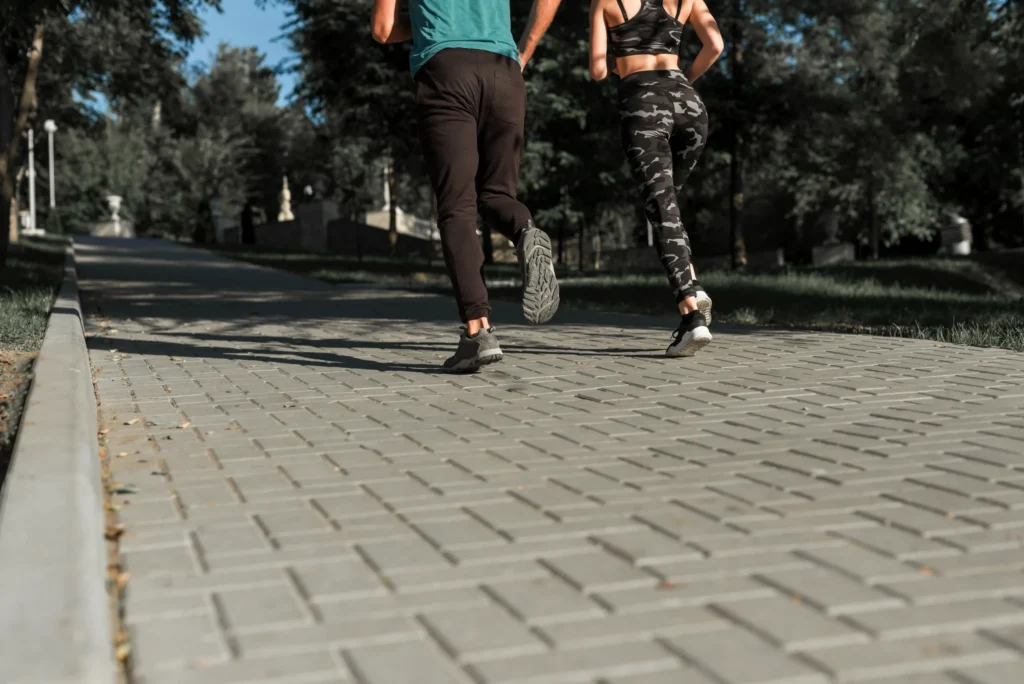
A return to running will often begin below your previous training level. Distance, frequency, speed and hills can then be reintroduced according to your symptoms and rehabilitation progress.
Some runners may benefit from changes to pace, terrain, stride length or cadence. Running technique varies, however, and gait changes are not required in every case.
Pain that becomes progressively worse, changes your running pattern or remains notably aggravated afterwards may suggest that the session was too demanding.
4. Consider Supporting Treatments
Taping or foot orthoses may provide short-term support in selected cases. Hands-on treatment may also help with pain or movement for some people.
Supporting treatments may be considered, but education and progressive exercise remain central to improving the knee’s ability to tolerate activity.
How Long Does Runner’s Knee Last?
There is no fixed recovery period.
Symptoms that have only recently begun may settle more quickly than pain that has been present for several months. Recovery also depends on the demands of the activity you want to resume.
Factors that may affect progress include:
- How long the symptoms have been present
- The size of the recent increase in activity
- Your current strength and conditioning
- Whether another knee condition is involved
- Consistency with rehabilitation
- The demands of your work or sport
A reduction in pain is encouraging, but it is not the only sign of recovery. The knee also needs enough strength, control and tolerance for the activity you expect it to perform.
When Should You Seek Medical Advice?
Arrange an assessment if the pain persists, repeatedly returns or limits your usual activities.
The NHS guidance on knee pain recommends seeking urgent help when:
- The knee is very painful
- You cannot move it or put weight through it
- It is badly swollen or has changed shape
- It locks, repeatedly gives way or painfully clicks
- It is hot and red
- You feel feverish, shivery or generally unwell
- Symptoms began after a significant injury
These signs are not typical of straightforward runner’s knee and should not be managed solely through an online exercise programme.
Can Runner’s Knee Be Prevented?
No method can guarantee that knee pain will never occur. However, sensible training choices may reduce avoidable increases in load.
It may help to:
- Increase training gradually
- Avoid changing distance, speed and hills at the same time
- Keep regular strength work in your routine
- Allow recovery between demanding sessions
- Replace footwear when it is badly worn
- Rebuild gradually after illness or time away
- Respond early when symptoms begin to increase
Once symptoms are manageable, activity can usually be rebuilt progressively so that the knee becomes better prepared for the demands of running, work or sport.
When Physiotherapy May Help With Runner’s Knee
Runner’s knee usually refers to patellofemoral pain, but the name alone cannot explain why your knee hurts. An assessment can help distinguish it from tendon pain, meniscal problems and other knee conditions.
During a sports physiotherapy assessment, we consider your symptoms, training history, movement, physical capacity and activity goals.
The findings can then be used to shape an individual rehabilitation plan, which may include symptom management, progressive exercise and a gradual return to running.
Visit our sports physiotherapy service to learn more about how we assess sports-related pain and support rehabilitation.