
Most men only find out they have a pelvic floor when something’s gone wrong with it. Erection quality, urinary control, ejaculation timing: all of it runs through a set of muscles almost no one thinks about until they stop pulling their weight.
Pelvic floor exercises are one of the most under-used tools in men’s health. Done properly, they can improve erectile function. Done badly or done for the wrong reason, they waste time and sometimes make things worse. Here’s what actually matters if you want to use them for ED.
Why the Pelvic Floor Matters for Erections
An erection is a plumbing job. Blood flows in, and the pelvic floor muscles clamp down on the veins that would otherwise let it flow back out. If those muscles aren’t doing their job, blood escapes too easily and the erection softens.
The two muscles that do most of this work are the bulbocavernosus and the ischiocavernosus. You don’t need to remember the names. What you do need to know is that they can be trained the same way any other muscle can be trained, and if they’re weak, deconditioned or poorly coordinated, erections suffer.
Loss of erection during intercourse, where you get hard but can’t hold it, is the classic pelvic-floor pattern. So is difficulty reaching full firmness in the first place.
Strengthening Isn’t Always the Answer
The assumption is that if pelvic floor exercises help ED, then every man with ED needs to strengthen his pelvic floor. That’s only half the picture. Plenty of the men we assess have the opposite problem: a pelvic floor that’s already too tight, gripping constantly, and never fully relaxing. Adding Kegels to that situation is like doing bicep curls with your fists already clenched. It doesn’t help. It usually makes it worse.
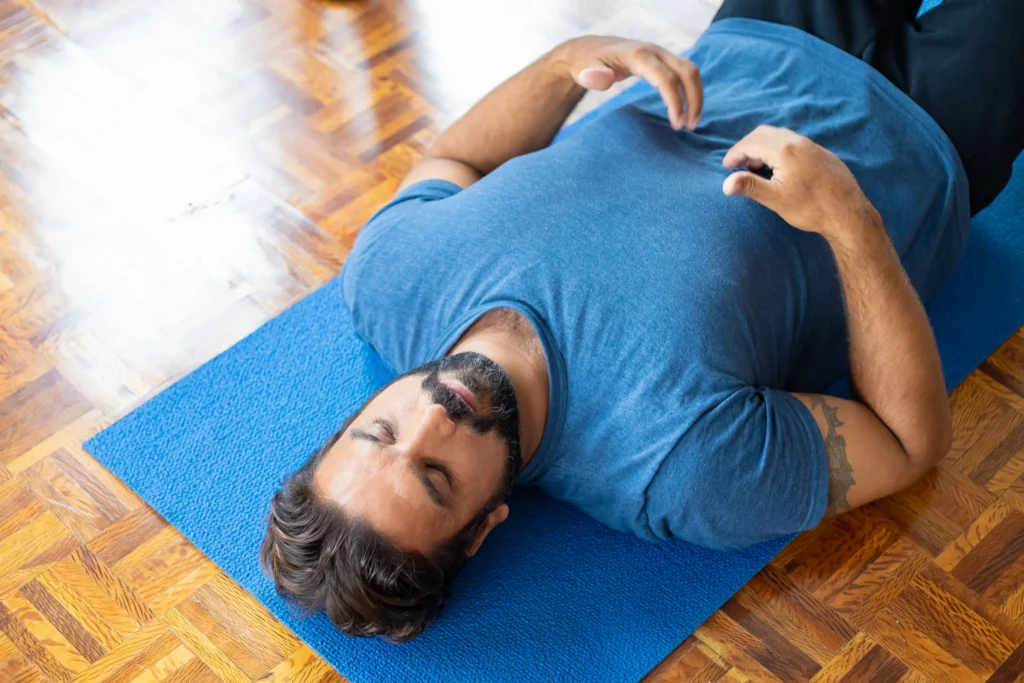
Signs your pelvic floor might be tight rather than weak:
- Tension or aching in the perineum or lower pelvis
- Urinary hesitancy or a feeling of not fully emptying
- Pain with ejaculation
- Symptoms that flare after sitting, exercise or stress
If any of that applies, the training you need is downregulation, not strengthening. Learning to relax the muscles fully, often through breath work and posture, comes before any strengthening.
Three Mistakes Men Make on Their Own
Bracing the wrong muscles. Told to squeeze their pelvic floor, most men tighten their glutes, their abs, their thighs, and hold their breath. None of that is the pelvic floor. The actual contraction is subtle: a lifting sensation at the base of the penis and around the anus, without visible movement anywhere else.
Overtraining. Fifty Kegels a day sounds virtuous. It’s usually counterproductive. The pelvic floor responds to quality, not volume, and hammering it into fatigue creates the tightness problem above.
Only doing the strong bit. Every contraction needs a full release. Men who only ever squeeze end up with a muscle that can’t switch off. The relaxation phase is as important as the effort.
A Starter Routine That Actually Works
Get the technique right before you worry about a programme. Sit or lie down somewhere private. Breathe out, and gently draw up as if you were stopping yourself from passing wind and lifting the base of your penis at the same time. That’s the contraction. Hold it briefly. Then let go completely, not just releasing the effort but consciously dropping the muscle back down.
If your abs, glutes or thighs tensed up, you cheated. Start again.
Once you’ve found the muscle, work in sets: five to ten slow contractions with a full release between each, twice a day, five days a week. That’s it. Add a few quick pulses at the end of each set once the slow version feels controlled.
Give it eight to twelve weeks before you judge whether it’s helping. Erectile changes from pelvic floor training tend to build gradually. A month is rarely long enough to tell.
When Exercises Aren’t Enough
Pelvic floor training works best when the pelvic floor is a meaningful part of the problem. It’s less effective when the driver is something else: impaired blood flow into the penis, medication side effects, hormonal factors or a nerve issue following pelvic surgery.

If you’ve trained consistently for three months and nothing’s shifted, the exercises probably aren’t the answer on their own. That doesn’t mean you’ve failed. It means something else is driving the problem, and it’s worth looking at what.
For men whose ED has a vascular component, often alongside cardiovascular risk factors, diabetes or years of smoking, focused shockwave therapy is one of the treatments we offer at Core Body Clinic. It targets blood flow specifically, and in the right candidate it works well alongside pelvic floor training rather than instead of it. Identifying which men are the right candidates is the point of an assessment.
Book an Assessment
If you’ve been doing pelvic floor exercises without much progress, or you aren’t sure whether you’re doing them properly, book a men’s health assessment at Core Body Clinic in Reading or Swansea. We’ll look at what’s driving your symptoms, show you the technique in person, and give you a straight answer on whether pelvic floor training alone is enough or whether adding shockwave therapy would give you a better result.