
What Is Arthrosamid?
Arthrosamid® is a 2.5% polyacrylamide hydrogel specifically developed for the intra-articular treatment of knee osteoarthritis. Unlike hyaluronic acid injections, which supplement or replace depleted synovial fluid, Arthrosamid works through a fundamentally different mechanism: it physically integrates into the synovial membrane itself, reinforcing the joint structure from within.
This distinction matters clinically. Because Arthrosamid is non-biodegradable, it does not break down and does not require repeat administration. A single treatment delivers the complete therapeutic dose. There is no ongoing maintenance schedule. The structural change it produces in the synovial membrane is intended to be permanent, which is why the duration of benefit, typically 3 to 5 years in the majority of patients, is significantly longer than other injectables currently available for knee osteoarthritis.
How Arthrosamid Works
When injected into the knee joint under ultrasound guidance, Arthrosamid does not remain free in the joint space. The hydrogel integrates into the synovial membrane, physically thickening and reinforcing the tissue. This creates a stable biological scaffold within the membrane that cushions the joint surfaces by reducing mechanical stress on articular cartilage and subchondral bone; suppresses inflammatory signalling within the synovium, which drives chronic pain in osteoarthritic joints; and reduces the load transmission that causes pain with weight-bearing, movement, and activity.
Because the scaffold persists indefinitely, the anti-inflammatory and load-absorbing effects are sustained over time rather than progressively declining as a biodegradable agent is metabolised.
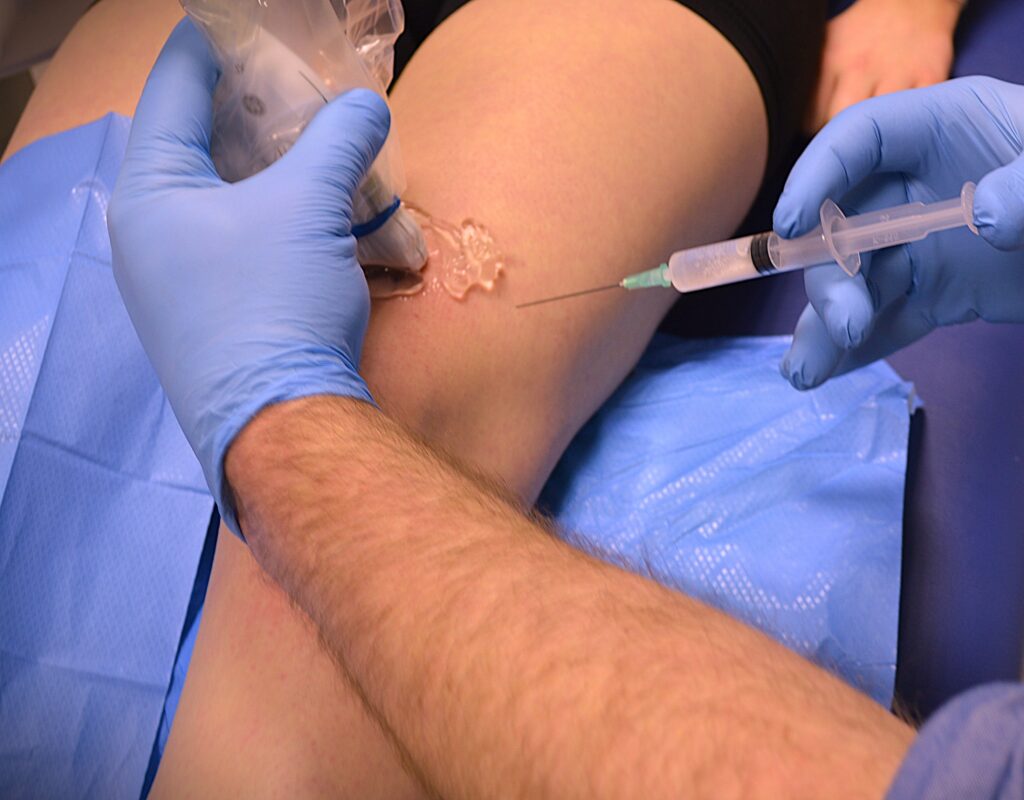
The procedure is completed in a single outpatient appointment under local anaesthetic. Six 1ml syringes are administered sequentially to deliver the complete therapeutic dose. No surgery, no hospital admission, and no general anaesthetic are required.
Clinical Evidence and Patient Selection
Treatment Benefits
Clinical trials report success rates above 80%, with statistically significant improvements in both pain scores and physical function outcomes. Arthrosamid has been evaluated against WOMAC and Patient Global Assessment (PGA) outcome measures, both of which demonstrate sustained, clinically meaningful improvement at 2 years post-treatment. The evidence base spans over 20 years of research with data from 463 patients, providing a level of long-term clinical certainty that newer injectable therapies cannot yet match.
Patients typically begin to notice pain reduction within 4 weeks of treatment. Functional improvement continues to develop over the months that follow as inflammation reduces and activity levels gradually increase.
Who Is Arthrosamid For?
Arthrosamid is indicated for knee osteoarthritis at a moderate to moderate-severe severity level. It is most appropriate for patients who have not achieved lasting relief from hyaluronic acid or steroid injections; those seeking a non-surgical alternative to knee replacement; patients for whom the frequency and cost of repeat injections have become a consideration; those who wish to avoid regular return appointments for ongoing joint management; and patients with a documented, confirmed diagnosis of knee osteoarthritis on imaging.
Arthrosamid is not indicated for mild osteoarthritis where viscosupplementation has not yet been trialled, and it is not currently used in joints other than the knee. Suitability is confirmed at your clinical assessment, which includes ultrasound imaging at the same appointment.
Treatment Timeline
Most patients notice the beginning of improvement within 4 weeks of injection. Functional benefit typically develops progressively over 3 to 6 months as inflammation reduces and the structural effect of the hydrogel scaffold establishes. Clinical relief commonly persists for 3 to 5 years, with a proportion of patients reporting continued benefit for 5 to 8 years.
Because Arthrosamid is a single-treatment intervention, there is no repeat injection schedule. If symptoms return after several years, re-treatment can be discussed with your clinician.
Safety Profile
Arthrosamid has a well-established safety record across more than two decades of clinical data. It is biocompatible and non-biodegradable, and no systemic reactions have been reported in the clinical literature. The most commonly reported side effects are mild localised discomfort or temporary stiffness at the injection site in the days following treatment. Serious adverse events are rare. The tolerability profile compares favourably with all other injectable treatments currently available for knee osteoarthritis.
The Diagnostic Assessment at Our Reading Clinic
Arthrosamid is not administered without prior clinical assessment at our Reading clinic. This is a clinical necessity, not a procedural requirement.
Arthrosamid is specifically indicated for moderate knee osteoarthritis confirmed on imaging. The degree of cartilage loss, the presence of synovial inflammation, and the integrity of surrounding structures must all be established before treatment is selected. These variables determine whether Arthrosamid is the most appropriate option, and they cannot be assessed from a referral letter or symptom history alone.
At The Atrium, our assessment includes a full clinical history, physical examination of the affected knee, and ultrasound imaging performed in-house at the same appointment. Ultrasound allows us to visualise the joint in real time, confirming the degree of synovial thickening or effusion and guiding the injection needle to the precise intra-articular target with accuracy that landmark-guided injection cannot replicate.
For patients with existing MRI or X-ray imaging, we review this alongside our ultrasound findings. Where Arthrosamid is being considered, this assessment confirms the grade of osteoarthritis, establishes that Arthrosamid is the most appropriate treatment, and rules out contraindications before the treatment is booked.
Arthrosamid Injections at Our Reading Clinic
Core Body Clinic’s Reading clinic at The Atrium, Scours Lane, RG30 6AY is fully equipped to administer Arthrosamid under ultrasound guidance by advanced practice physiotherapists. All patients undergo clinical assessment before treatment. We accept all major private medical insurance providers and welcome self-funding patients. Full pricing is available on our price list page.
No GP referral is required. Book your clinical assessment online or call 07748152377.
How is Arthrosamid different from a steroid or hyaluronic acid injection?
Steroid injections reduce inflammation in the short term but do not address joint structure. Hyaluronic acid injections supplement synovial fluid and typically provide relief for 6 to 12 months before repeat treatment is needed. Arthrosamid works differently: it integrates into the synovial membrane and physically reinforces the joint structure. Because it is non-biodegradable, the effect persists. A single Arthrosamid treatment typically provides relief lasting 3 to 5 years, making it a qualitatively different intervention to either alternative.
How long does the Arthrosamid procedure take?
The procedure is completed in a single outpatient appointment. Six 1 ml syringes are administered under local anaesthetic under ultrasound guidance. The appointment, including assessment, preparation, and post-procedure observation, typically takes 60 to 90 minutes. No hospital admission or general anaesthetic is required.
Is Arthrosamid available on the NHS?
Arthrosamid is not currently routinely available on the NHS. It is offered at Core Body Clinic’s Reading clinic as a private treatment. While the upfront cost is higher than a single hyaluronic acid injection, the long-term cost over a 5-year horizon is typically lower when repeat HA treatments are factored in. Our clinicians can discuss pricing and insurance coverage at your assessment appointment.
Can Arthrosamid be used in joints other than the knee?
Arthrosamid is currently indicated specifically for knee osteoarthritis and is not used in other joints. If you have osteoarthritis in a hip, shoulder, or ankle joint, our clinicians can discuss alternative injectable options, including hyaluronic acid viscosupplementation, which is appropriate across a wider range of joints.
Do I need a GP referral?
No referral is required. You can self-refer by booking your clinical assessment online or calling 01792 369535. We accept patients referred by GPs, consultants, and other healthcare professionals and are recognised by all major private medical insurance providers.